
I went deep into the Cowboys’ 2025 play-action offense to find out what made it so dangerous. The film showed a system built on formation diversity, misdirection and easy answers for Dak Prescott. The numbers backed it up.
Why the Cowboys’ Play-Action Game Was Their Offensive Cheat Code
I went deep into the Cowboys’ 2025 play-action offense to find out what made it so dangerous. The film showed a system built on formation diversity, misdirection and easy answers for Dak Prescott. The numbers backed it up.
Why the Cowboys’ Play-Action Game Was Their Offensive Cheat Code
I went deep into the Cowboys’ 2025 play-action offense to find out what made it so dangerous. The film showed a system built on formation diversity, misdirection and easy answers for Dak Prescott. The numbers backed it up.
Why the Cowboys’ Play-Action Game Was Their Offensive Cheat Code

7 Min Read
Kris Kretschman
Why the Cowboys’ Play-Action Game Was Their Offensive Cheat Code
Why the Cowboys’ Play-Action Game Was Their Offensive Cheat Code
I went deep into the Cowboys’ 2025 play-action offense to find out what made it so dangerous. The film showed a system built on formation diversity, misdirection and easy answers for Dak Prescott. The numbers backed it up.
I went deep into the Cowboys’ 2025 play-action offense to find out what made it so dangerous. The film showed a system built on formation diversity, misdirection and easy answers for Dak Prescott. The numbers backed it up.
Kris Kretschman
Kris Kretschman
August 24th, 2026
7 Min Read
8 min read
There were a lot of things the Cowboys did well offensively in 2025.
But after going back through the tape, one thing kept jumping off the screen.
Play action.
Not because Dallas reinvented football. They didn’t. What stood out was how many different ways Brian Schottenheimer found to dress up the same basic idea.
I charted 57 play-action reps across five games, and by the end of it, there was a clear pattern.
Dallas could get to its play-action game from almost anywhere.
Shotgun. Under center. 11 personnel. 12 personnel. Heavy personnel. Condensed formations. Motion. Shifts. Jet action.
And when defenses started flowing toward all of that window dressing, Dak Prescott usually had an answer waiting for him.
The Numbers Back Up the Tape
Dallas used play action on 186 dropbacks during the 2025 regular season.
The difference in production was substantial.
With play action, the Cowboys averaged +0.323 EPA per dropback with a 55.9% success rate.
Without it?
Just +0.096 EPA per dropback with a 45.8% success rate.
Here’s the part that really caught my attention: Dallas actually threw the ball shorter on average when it used play action.
And yet the Cowboys averaged 8.96 yards per attempt with play action compared to 7.09 without it. Their explosive pass rate jumped from 14.4% to 22.3%.
That’s what makes this so interesting.
The Cowboys weren’t simply calling play action and launching the ball 40 yards downfield.
The fake was creating space.
And Dallas was taking advantage of it.
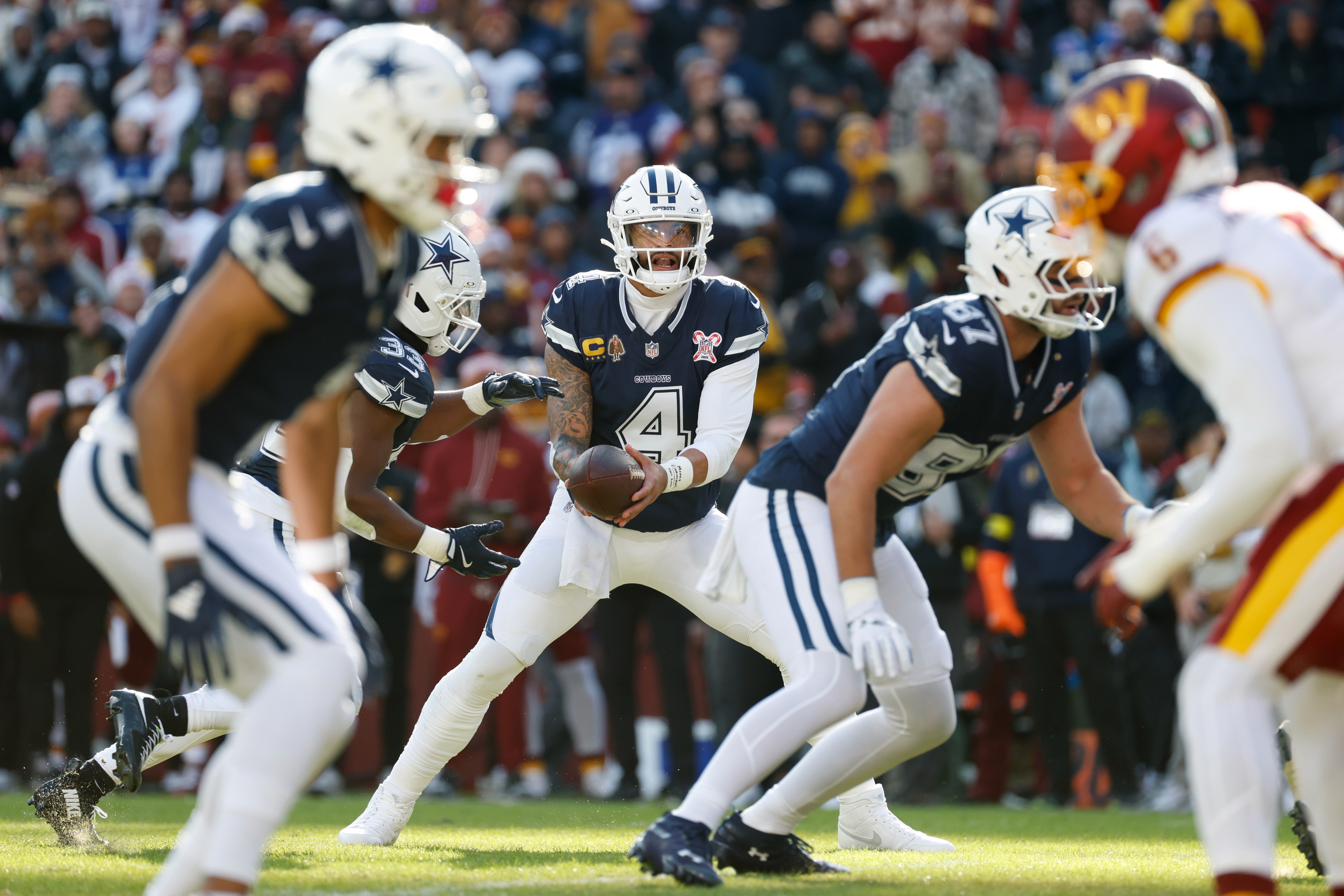
Photo: Amber Searls-Imagn Images
Same Idea, Over and Over Again
What stood out on film wasn’t one specific play-action concept. It was how Dallas kept getting to the same basic answers from completely different presentations.
One snap might start in shotgun with 11 personnel. The next could come from under center with two tight ends on the field. Dallas used condensed formations, shifts, jet motion and different backfield actions, but a lot of it was designed to accomplish the same thing: make the defense process the run before defending the pass.
That matters because linebackers don’t need to completely bite on the fake for play action to work.
Sometimes one false step is enough.
A linebacker stepping toward the line of scrimmage can create an extra window behind him. A safety getting his eyes caught in the backfield can be the difference between arriving on time and arriving a second late. An edge defender squeezing down can give Prescott a cleaner launch point outside the pocket.
Dallas kept finding different ways to create those moments.
The formation might change. The personnel might change. The window dressing might change.
The conflict stayed the same.
The presentation changes, but the idea remains the same: use the run action to create hesitation and give Prescott a clean picture to attack.
One of my favorite examples came from the way Dallas used movement before the snap.
The motion itself wasn’t always the point. Sometimes it helped Prescott identify coverage. Sometimes it changed the strength of the formation. Other times it forced defenders to communicate and adjust their responsibilities seconds before the ball was snapped.
But what I kept noticing was how all of that movement worked together with the play fake.
Dallas could show one picture before the snap, change it with a shift or motion, and then make the defense process the run action after the ball was snapped. That’s a lot of information being thrown at a defense in a short amount of time.
And Prescott was often left with a relatively simple answer on the other side of it.
That’s where this offense was at its best.
It wasn’t about fooling all 11 defenders. It was about creating just enough hesitation, changing a defender’s leverage or opening a window that wasn’t there before the fake.
And when the Cowboys did that, the game looked easier for everybody.
Then Dallas Hit You Over the Top
The easy completions were only part of the equation.
Eventually, somebody has to pay for stepping forward.
One of the best examples I found came against Kansas City with Dallas backed up near its own goal line.
The Cowboys came out in 21 personnel and shifted Luke Schoonmaker across the formation before the snap. Prescott turned his back to the defense and sold the play fake to Javonte Williams.
Behind it, George Pickens ran the deep over.
CeeDee Lamb took the post.
This was Yankee, and Kansas City got caught.
Lamb got behind the defense for 51 yards.
That play is the other side of what made Dallas’ play-action game so difficult to defend. The same personnel, formations and backfield action that created easy throws underneath could suddenly turn into an explosive shot over your head.
And the full-season numbers back that up.
On non-screen play-action targets, Lamb averaged 18.04 yards per target and generated +1.180 EPA per target. Pickens averaged 14.04 yards per target with +0.882 EPA per target.
When Dallas got its wide receivers involved off play action, the results were devastating.
Dallas pairs the deep over with Lamb’s post off play action, creating the 51-yard explosive.
This Is Where Dallas Has to Build From
The biggest takeaway from watching all of these reps wasn’t that Dallas needs to call play action on every other snap.
It was how comfortable the offense looked when everything worked together.
The formation had a purpose. The motion had a purpose. The run action had a purpose. And by the time Prescott came out of the fake, the offense had often already created the picture it wanted.
That matters because Prescott has always been at his best when he can play with anticipation and attack defined space. This version of the offense gave him opportunities to do exactly that.
The numbers reflect it.
Dallas averaged +0.323 EPA per dropback with play action compared to +0.096 without it. The explosive pass rate jumped from 14.4% to 22.3%.
But the tape explains why.
Schottenheimer found different ways to dress up the same ideas without making the offense unnecessarily complicated. Different personnel. Different formations. Different motions.
Same stress on the defense.
That’s the part I’d carry forward.
Because the Cowboys don't need to completely reinvent an offense that was already one of the NFL's most productive units. They need to lean harder into the things that consistently made life easier for their quarterback.
In 2025, nothing did that better than play action.
And after charting 57 of those reps, that was the part of this offense I kept coming back to.
Editorial Note
This article is based on my independent film study of 57 play-action reps across five Dallas Cowboys games from the 2025 regular season, along with full-season advanced data. AI tools were used to assist with organizing the research and editing the final written piece. All film observations, analysis and conclusions are my own.
Film study and analysis by Kris Kretschman. Advanced data via SumerSports.
There were a lot of things the Cowboys did well offensively in 2025.
But after going back through the tape, one thing kept jumping off the screen.
Play action.
Not because Dallas reinvented football. They didn’t. What stood out was how many different ways Brian Schottenheimer found to dress up the same basic idea.
I charted 57 play-action reps across five games, and by the end of it, there was a clear pattern.
Dallas could get to its play-action game from almost anywhere.
Shotgun. Under center. 11 personnel. 12 personnel. Heavy personnel. Condensed formations. Motion. Shifts. Jet action.
And when defenses started flowing toward all of that window dressing, Dak Prescott usually had an answer waiting for him.
The Numbers Back Up the Tape
Dallas used play action on 186 dropbacks during the 2025 regular season.
The difference in production was substantial.
With play action, the Cowboys averaged +0.323 EPA per dropback with a 55.9% success rate.
Without it?
Just +0.096 EPA per dropback with a 45.8% success rate.
Here’s the part that really caught my attention: Dallas actually threw the ball shorter on average when it used play action.
And yet the Cowboys averaged 8.96 yards per attempt with play action compared to 7.09 without it. Their explosive pass rate jumped from 14.4% to 22.3%.
That’s what makes this so interesting.
The Cowboys weren’t simply calling play action and launching the ball 40 yards downfield.
The fake was creating space.
And Dallas was taking advantage of it.
Photo: Amber Searls-Imagn Images
Same Idea, Over and Over Again
What stood out on film wasn’t one specific play-action concept. It was how Dallas kept getting to the same basic answers from completely different presentations.
One snap might start in shotgun with 11 personnel. The next could come from under center with two tight ends on the field. Dallas used condensed formations, shifts, jet motion and different backfield actions, but a lot of it was designed to accomplish the same thing: make the defense process the run before defending the pass.
That matters because linebackers don’t need to completely bite on the fake for play action to work.
Sometimes one false step is enough.
A linebacker stepping toward the line of scrimmage can create an extra window behind him. A safety getting his eyes caught in the backfield can be the difference between arriving on time and arriving a second late. An edge defender squeezing down can give Prescott a cleaner launch point outside the pocket.
Dallas kept finding different ways to create those moments.
The formation might change. The personnel might change. The window dressing might change.
The conflict stayed the same.
The presentation changes, but the idea remains the same: use the run action to create hesitation and give Prescott a clean picture to attack.
One of my favorite examples came from the way Dallas used movement before the snap.
The motion itself wasn’t always the point. Sometimes it helped Prescott identify coverage. Sometimes it changed the strength of the formation. Other times it forced defenders to communicate and adjust their responsibilities seconds before the ball was snapped.
But what I kept noticing was how all of that movement worked together with the play fake.
Dallas could show one picture before the snap, change it with a shift or motion, and then make the defense process the run action after the ball was snapped. That’s a lot of information being thrown at a defense in a short amount of time.
And Prescott was often left with a relatively simple answer on the other side of it.
That’s where this offense was at its best.
It wasn’t about fooling all 11 defenders. It was about creating just enough hesitation, changing a defender’s leverage or opening a window that wasn’t there before the fake.
And when the Cowboys did that, the game looked easier for everybody.
Then Dallas Hit You Over the Top
The easy completions were only part of the equation.
Eventually, somebody has to pay for stepping forward.
One of the best examples I found came against Kansas City with Dallas backed up near its own goal line.
The Cowboys came out in 21 personnel and shifted Luke Schoonmaker across the formation before the snap. Prescott turned his back to the defense and sold the play fake to Javonte Williams.
Behind it, George Pickens ran the deep over.
CeeDee Lamb took the post.
This was Yankee, and Kansas City got caught.
Lamb got behind the defense for 51 yards.
That play is the other side of what made Dallas’ play-action game so difficult to defend. The same personnel, formations and backfield action that created easy throws underneath could suddenly turn into an explosive shot over your head.
And the full-season numbers back that up.
On non-screen play-action targets, Lamb averaged 18.04 yards per target and generated +1.180 EPA per target. Pickens averaged 14.04 yards per target with +0.882 EPA per target.
When Dallas got its wide receivers involved off play action, the results were devastating.
Dallas pairs the deep over with Lamb’s post off play action, creating the 51-yard explosive.
This Is Where Dallas Has to Build From
The biggest takeaway from watching all of these reps wasn’t that Dallas needs to call play action on every other snap.
It was how comfortable the offense looked when everything worked together.
The formation had a purpose. The motion had a purpose. The run action had a purpose. And by the time Prescott came out of the fake, the offense had often already created the picture it wanted.
That matters because Prescott has always been at his best when he can play with anticipation and attack defined space. This version of the offense gave him opportunities to do exactly that.
The numbers reflect it.
Dallas averaged +0.323 EPA per dropback with play action compared to +0.096 without it. The explosive pass rate jumped from 14.4% to 22.3%.
But the tape explains why.
Schottenheimer found different ways to dress up the same ideas without making the offense unnecessarily complicated. Different personnel. Different formations. Different motions.
Same stress on the defense.
That’s the part I’d carry forward.
Because the Cowboys don't need to completely reinvent an offense that was already one of the NFL's most productive units. They need to lean harder into the things that consistently made life easier for their quarterback.
In 2025, nothing did that better than play action.
And after charting 57 of those reps, that was the part of this offense I kept coming back to.
Editorial Note
This article is based on my independent film study of 57 play-action reps across five Dallas Cowboys games from the 2025 regular season, along with full-season advanced data. AI tools were used to assist with organizing the research and editing the final written piece. All film observations, analysis and conclusions are my own.
Film study and analysis by Kris Kretschman. Advanced data via SumerSports.
Kris Kretschman Newsletter
Kris Kretschman Newsletter
Get Cowboys columns, film notes, and show updates straight to your inbox.
Get Cowboys columns, film notes, and show updates straight to your inbox.
You’re on the list after submitting a valid email.
You’re on the list after submitting a valid email.